
The Juneteenth Blindspot
Confronting America's Delayed Reality of Black Brilliance
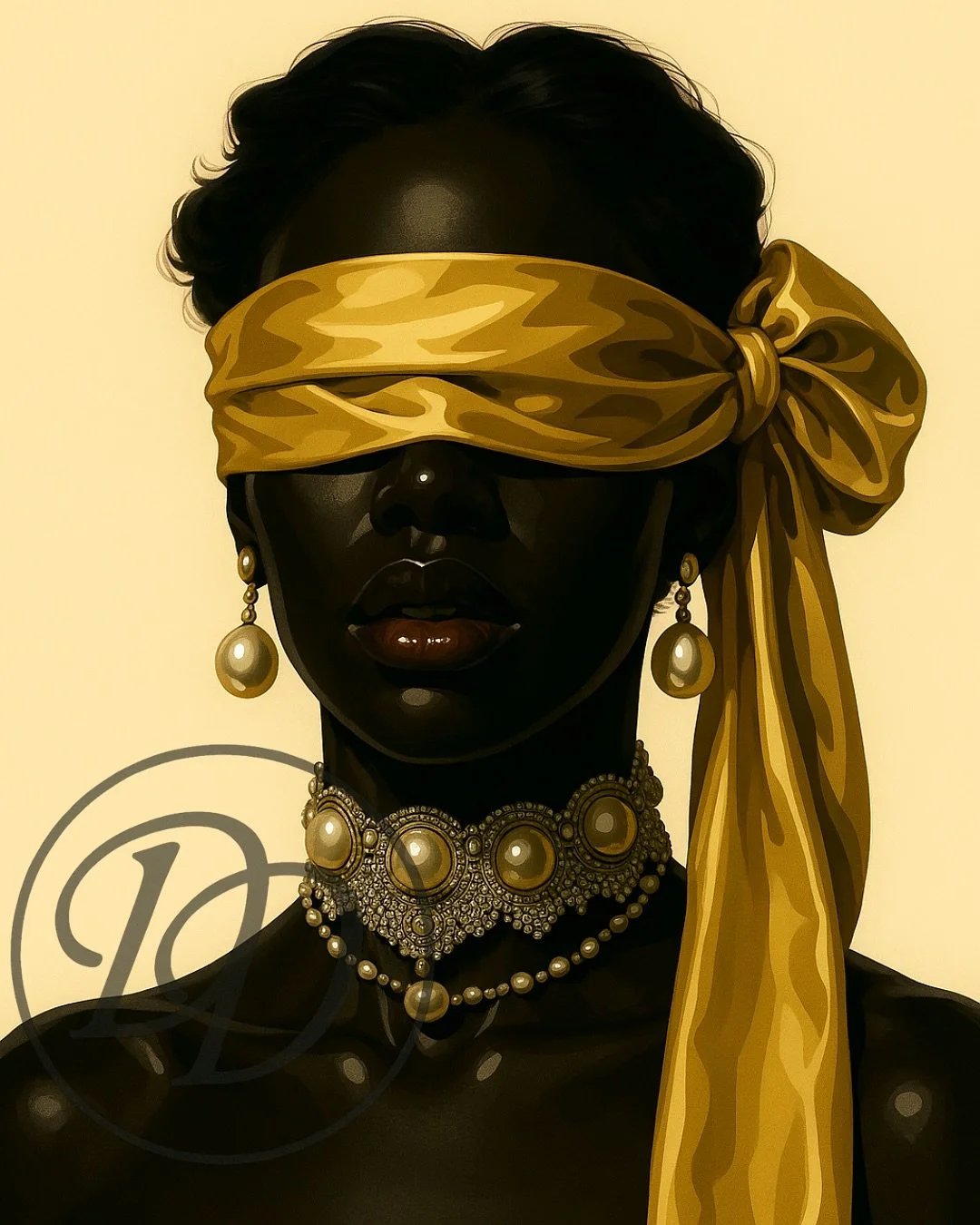
“Blind Faith’—luxury in silence”
Dollys Digital 11.3.25
For more than two and a half years after the Emancipation Proclamation was signed, 250,000 enslaved people in Texas continued to labor under the whip, completely unaware that they were legally free. When Union General Gordon Granger finally arrived in Galveston on June 19, 1865, to announce their emancipation, he audaciously advised the newly freed men and women to "remain quietly at their present homes and work for wages". This historical delay, whether caused by the slow travel of news, a murdered messenger, or the federal government's deliberate suppression to get one last cotton harvest out of enslaved people, stands as the origin of the Juneteenth holiday. However, that historical delay is also a significant metaphor for America today.
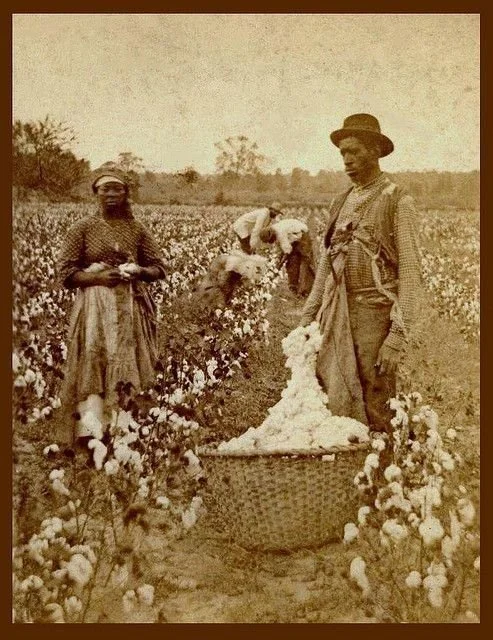
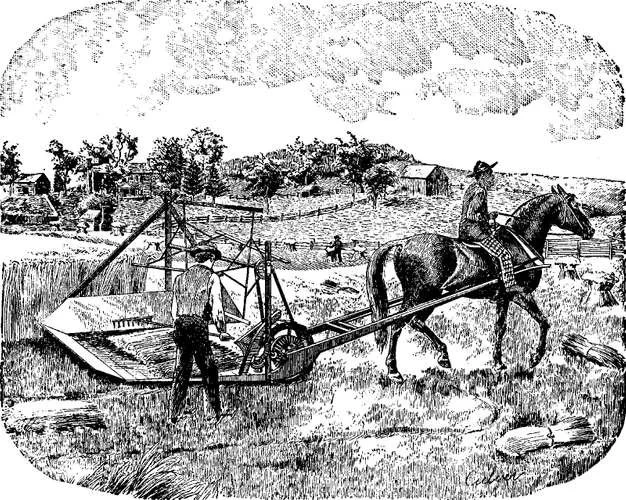
Photo by J.A. Palmer taken between 1870 and 1885 in Aiken, South Carolina.
The lack of personal identification of the people in this photograph reflects a broader historical pattern regarding how these images were produced and preserved. J.A. Palmer created these images to sell as commercial stereoview cards to tourists and northern markets. The subjects were treated as generalized, anonymous representations of Southern agricultural life rather than specific individuals.
For centuries, mainstream society has been willingly incompetent, operating under a delayed reality regarding the foundational contributions of Black Americans. People readily celebrate America's “greatness” while being dedicated to misunderstanding, or willfully ignoring the Black architects who built its modern comforts and culture.
It is time to cure the blindness and recognize that the modern world was quite literally built, engineered, and soundtracked by the very people society has systemically marginalized.
The Stolen Blueprints of Modern Convenience
When you flip a light switch, you probably think of Thomas Edison. In reality, Edison’s bulb was an expensive novelty that burned out after just 15 hours.
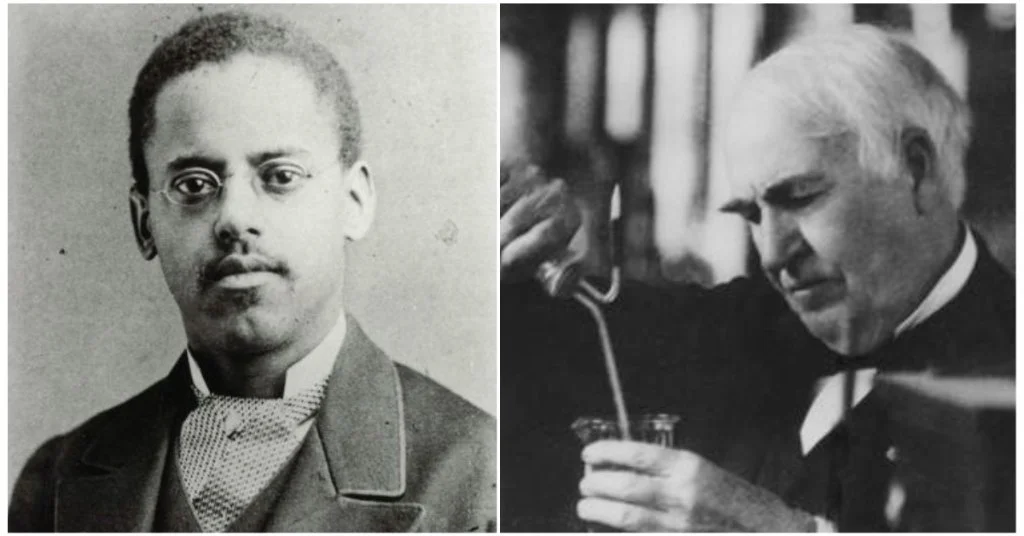
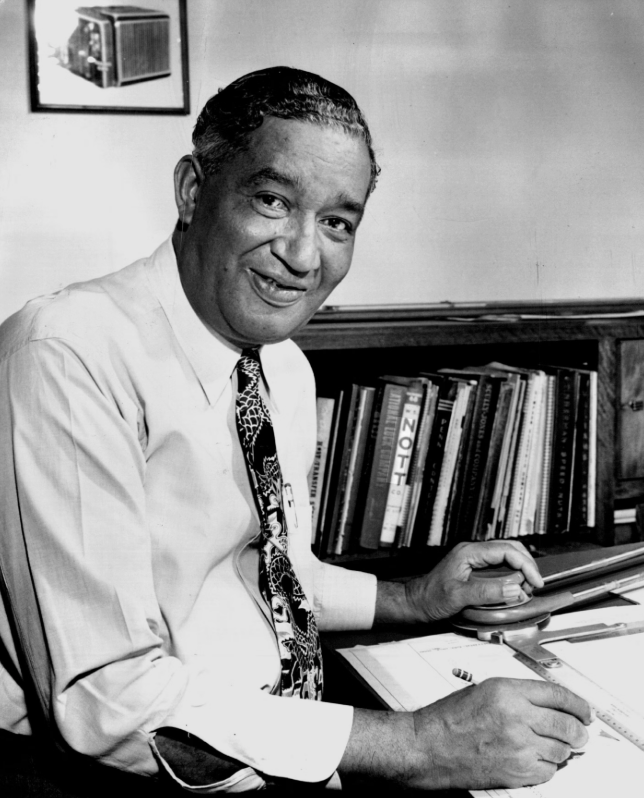
Lewis Latimer (Right) Thomas Edison (Left)
It was Lewis Latimer, a brilliant Black draftsman and engineer, who invented and patented the durable carbon filament in 1881 that allowed bulbs to last for hundreds of hours, making electric lighting practical and affordable for everyday homes and city streets worldwide.
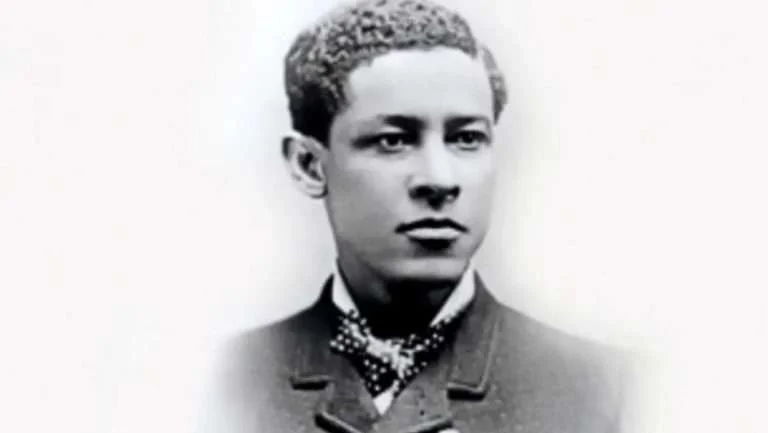
If you own affordable, mass-manufactured shoes, you owe a debt to Jan Ernst Matzeliger, an immigrant of the African diaspora. He revolutionized the global textile industry in 1883 by inventing the automatic shoe-lasting machine, increasing daily shoe production from a human's 50 pairs to an astonishing 700 pairs.
Marie Van Brittan Brown, a Black full-time nurse, invented the first closed-circuit TV security system with a motorized camera, a two-way microphone, and a panic button in 1966 to protect herself in her neighborhood.
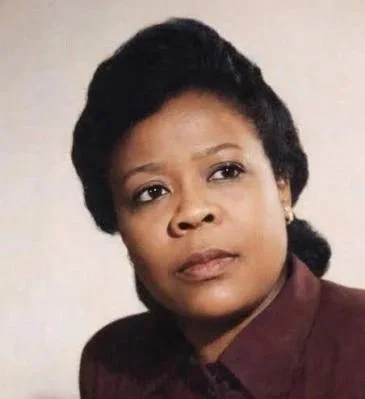
Dr. Gladys West, a Black mathematician working for the U.S. Navy, performed the complex programming and data processing that modeled the exact shape of the earth, creating the mathematical foundation for all modern GPS technology.
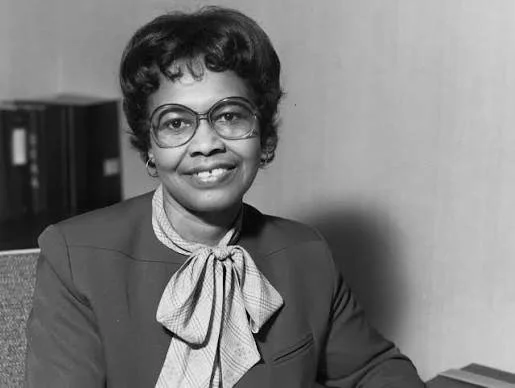
The cooling systems that preserve food, blood, and medical supplies during transport were patented by Frederick McKinley Jones in 1940.
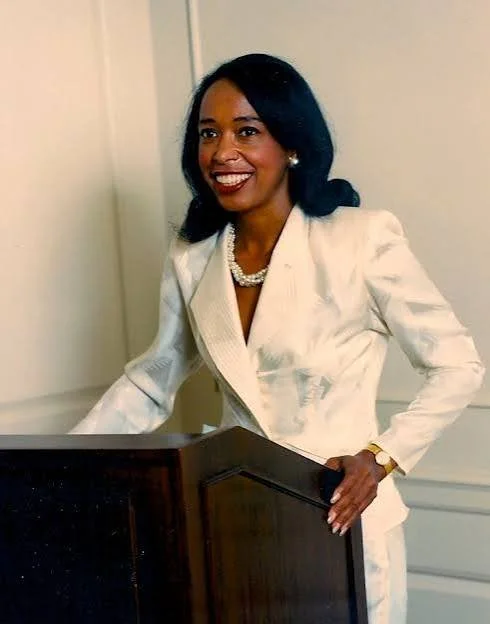
Dr. Patricia Bath revolutionized ophthalmology by inventing a highly efficient, less invasive laser cataract surgery in the 1980s, despite facing deep skepticism from her white male supervisors.
These achievements happened despite a system explicitly designed to bar Black intellect from ownership. Under 19th-century patent laws, an enslaved person couldn't legally own the benefits of their manual or intellectual labor.
"...and shall also make oath or affirmation that he does verily believe that he is the original and first inventor or discoverer... and shall also state of what country he is a citizen."
The highly profitable commercial cotton scraper of the 1850s, for instance, was actually invented by an enslaved man named Ned; his owner, Oscar J. E. Stuart (or Stewart), pocketed the massive fortunes generated by Ned’s intellectual property while mocking abolitionists in advertisements. Stuart’s request for a patent was initially denied after he could not prove he was true inventor of the cotton scraper. Stuart persisted, penning a letter to the Secretary of Interior Jacob Thompson, on August 25, 1858, asserting that;
“the master is the owner of the fruits of the labor of the slave, both manual and intellectual.”
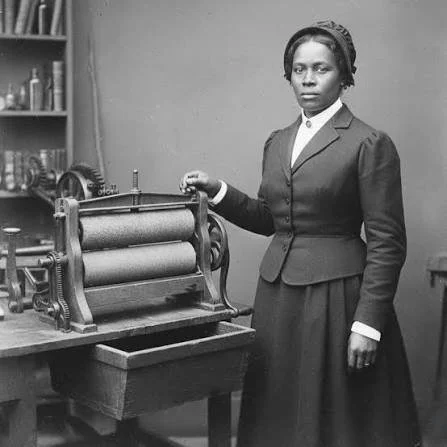
Ellen Eglin, who invented a revolutionary mechanical clothes wringer in 1888, sold her idea to a white agent for only $18 because she knew a Black woman's name would ruin the product's commercial chances among white housewives.
The Co-Opted Soul of American Culture
The theft of Black brilliance is not limited to scientific patents; it is the very blueprint of American pop culture. The defining instrument of white Appalachian country and bluegrass music (the banjo) is actually an entirely African instrument, recreated in the Americas by enslaved people from West African lutes like the *akonting*. For over two centuries, "country" string band music was predominantly played by Black musicians until it was co-opted by white blackface minstrel shows and scrubbed of its origins by 1920s record labels.
The same is true for Rock & Roll. Mainstream history credits Elvis Presley, but the genre was single-handedly pioneered in the late 1930s by Sister Rosetta Tharpe, a queer Black woman who was the first to plug in an electric guitar with heavy, aggressive riffs and distorted sound. Elvis Presley’s massive hit "Hound Dog" was a direct cover of a gritty 1953 blues song by Big Mama Thornton.
For decades, the music industry weaponized structurally deficient copyright laws and segregated radio waves to drain wealth from Black creators, allowing white imitators to become millionaires off their exact arrangements. As one legal scholar noted, there is a striking pattern of cultural appropriation where white performers obtained economic and artistic benefits directly at the expense of minority innovators.
Tending to the Foundation
Juneteenth is a celebration of freedom, but it is also a reminder of how freedom creates new struggles. After the 1865 announcement, many freedpeople who tried to leave their plantations were violently beaten, lynched, or murdered. When they attempted to celebrate the first anniversary of their freedom, expanding segregation laws meant they had no public spaces permitted to them, forcing former enslaved people to pool $800 to buy 10 acres of land in Houston just to have a park.
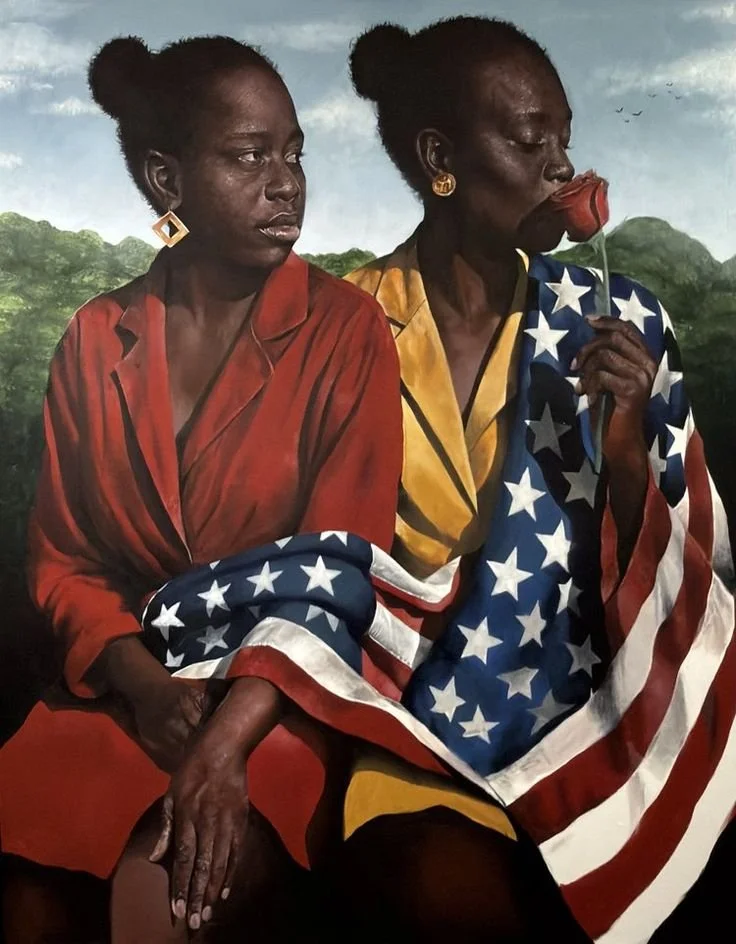
“A Rose in a Borrowed Country” (48” x 60”) acrylic on canvas -Nate Austin
To care about the integrity of an entire building means paying immediate, deliberate attention to the specific pillar that has been under structural strain. You do not reinforce the roof or stabilize a perfectly sound western wall and call the job done; you tend to the foundation that has borne the heaviest weight.
Acknowledging that Black innovators built this nation’s infrastructure and culture isn't a dismissal of the rest of the house;
It is the only way to keep the entire structure from collapsing.
Juneteenth is an invitation to shed the comfortable illusions of a whitewashed history. The modern conveniences, wealth, and culture of the United States are deeply indebted to Black minds, hands, and voices. We should instead celebrate this day, and honor the history and meaning behind it. Black history is American history, thus if one were to claim they are proud Americans, today should be a day of pride, acknowledgement, gratefulness, and respect.
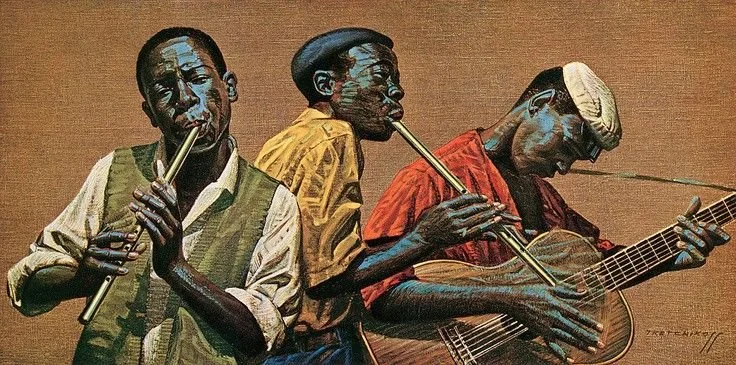
‘Penny Whistlers’
1959 oil painting by South African artist Vladimir Tretchikoff
To look at American history without centering Black history is an act of purposeful blindness.
We were blind, but now, there is no excuse not to see.
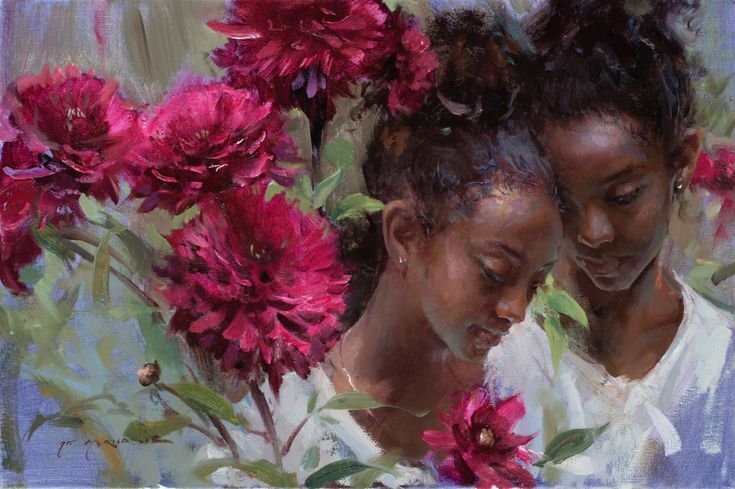
‘Duet’
Daniel Gerhartz
References
Conradt, S. (2023). 12 fascinating facts about Juneteenth. Mental Floss.
Dubois, L. (2016). The banjo: America's African instrument. *Civil War Book Review, 18*(4).
https://doi.org/10.31390/cwbr.18.4.07
Eberhardt, M., & Freeman, K. (2015). 'First things first, I'm the realest': Linguistic
appropriation, white privilege, and the hip-hop persona of Iggy Azalea. Journal of Sociolinguistics, 19 (3), 303-327.
Greene, K. J. (1998). Copyright, culture & Black music: A legacy of unequal protection.
Hastings Communications and Entertainment Law Journal, 21 (2), 339-392.
NHTI, Concord's Community College. (n.d.). Black history month: Black inventors.
The Racial Justice and Inclusion Working Group. (n.d.). Black firsts and inventors.
