
The Descent into Extremism: Rabbit Hole Syndrome in Religious Cults and the Manosphere

How does someone go from watching a few YouTube videos to believing the world is against them? How does simple curiosity become violent extremism? This shift is explained by "Rabbit Hole Syndrome," a psychological trap that works similarly whether a person is being recruited into a religious cult or drawn in by algorithm-driven manosphere content. Studies in neuroscience, evolutionary psychology, and emotional manipulation show that both real-life and online spaces can exploit people when they are vulnerable, isolate them, and build strong group identities that compel individuals toward radical and sometimes violent actions.
Introduction
In Lewis Carroll's Alice's Adventures in Wonderland, falling down the rabbit hole meant entering a strange and unpredictable world. Today, we use "going down the rabbit hole" to describe becoming obsessed with complex topics online. In digital psychology, however, the rabbit hole now describes a much darker path: a one-way journey into extremism.
An innocent search can quickly become a strict belief system that ignores any evidence to the contrary. Someone looking for dating advice might come to believe that women are naturally against men. A person seeking community during a lonely period can be drawn into a group that demands total loyalty and sees outsiders as enemies. Whether someone joined a religious cult in the 1970s or is radicalized by incel forums today, the psychological process is nearly the same.
Religious cults have long understood how to take advantage of people's vulnerability and isolation. Today, recommendation algorithms do the same, but much faster and on a bigger scale. By comparing how cults manipulate isolated people and how the modern "manosphere" radicalizes vulnerable men online, we see the same psychological forces pulling people into extremism.
The Anatomy of the Rabbit Hole: From Effect to Syndrome
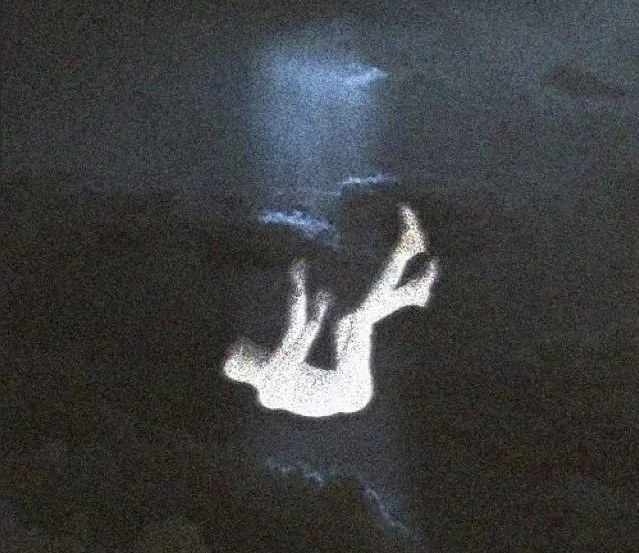
It is important to distinguish between two related ideas: the "rabbit hole effect" and "Rabbit Hole Syndrome."
The rabbit hole effect is straightforward. When you keep watching similar content, those ideas become easier to remember. The more you interact, the more the algorithm shows you the same type of content. What starts as mild interest can quickly take over. You keep clicking, the content grows more extreme, and your focus narrows. A small distraction can turn into mental overload and confusion.
When this media effect combines with extremist ideas, it becomes Rabbit Hole Syndrome. This syndrome has three clear stages: accidental entry, repeated deep involvement, and strong devotion to extreme or conspiracy beliefs.
This is where neuroscience becomes important. Studies show that strong fundamentalist beliefs are linked to lower activity in the part of the brain responsible for critical thinking and flexibility. People with rigid beliefs are less open to new ideas. Once someone goes deep enough into the rabbit hole, their ability to think critically is so weakened that simply giving them facts does not help. By that point, the trap is already set.
The Physical Descent: Group Manipulation in Religious Cults

Religious cults mastered the rabbit hole effect long before the internet existed. They appeared to understand how radicalization works, even without formal research.
Most people do not look for extremist groups. Cults recruit during times when people are vulnerable, such as after major life changes, deep loneliness, or personal crises. Someone might lose their job, end a relationship, or move to a new city where they know no one. In these hard moments, the promise of clear answers and a welcoming community is hard to resist.
Cults exploit this vulnerability through Group Psychological Abuse (GPA), a planned way to control people and their environment. This method reshapes a person's identity, making them fully dependent on a charismatic leader. The tactics may vary, but the pattern remains the same: they suppress critical thinking, isolate members from outsiders, enforce strict rules, and grant all authority to the leader.
Heaven's Gate targeted lonely, searching individuals by teaching them that the material world was an illusion. This belief systematically dismantled their capacity for independent thought, preparing them for the group's ultimate "ascension" through mass suicide. The Peoples Temple isolated members in Jonestown, Guyana, physically cutting them off from the outside world so completely that the group's reality became the only reality. No competing perspectives. No escape routes. No way to check whether what Jim Jones said was true.
In these situations, members undergo a profound psychological change. Their sense of self fades, and they begin to see themselves only as part of the group. An "us versus them" mindset grows stronger and becomes total certainty. The group becomes everything, and outsiders are seen as threats.
The Digital Descent: Radicalization in the Red Pill Manosphere

The "digital rabbit hole" is a modern form of radicalization, especially in the "manosphere," which includes online groups such as Men's Rights Activists (MRAs), Pick-Up Artists (PUAs), and involuntary celibates (incels). These groups share a "Red Pill" philosophy rooted in the belief that society is biased toward women. The psychological "trance" they induce creates a bidirectional relationship with poor mental health that is detrimentally harmful to the men involved.
The recruitment process often targets vulnerable young men who do not initially seek out extremist content. For instance, a search for gym advice or self-improvement can trigger algorithms that show increasingly radical material. The impact is quick and harmful; one UK survey found that 66% of boys aged 11–14 reported that viewing misogynistic content online made them feel worried, sad, or scared. This "rabbit hole" often ensnares those already feeling isolated or struggling with dating, giving them a community that validates their pain through a shared ideological narrative.
Many of these men feel lonely, socially isolated, or have trouble with dating. They are in a vulnerable state. Once inside this digital world, followers are indoctrinated with a cynical, rigid worldview that misuses evolutionary psychology. Key ideas include hypergamy, which the manosphere describes as a biological "hardwiring" in women to mate exclusively with the highest-status "alpha" males; the so-called "dual mating strategy," weaponized as the rule of "Alpha Fucks, Beta Bucks," claiming women use stable "betas" for resources while seeking "alphas" for sex; and the "Black Pill," a state of total hopelessness where they believe their low "sexual market value" is genetically determined by "a few millimeters of bone."
The manosphere promotes "Dark Triad" traits (narcissism, Machiavellianism, and psychopathy), encouraging men to hide their emotions, which are seen as weakness. This emotional suppression, often described as "maintaining frame," is a core component of a "warrior masculinity" that prevents men from seeking help. The statistics regarding male mental health and suicide are alarming; in 2023, 39,045 men took their own lives in the U.S., a risk four times higher than for women. Since 2010, suicide rates have risen by 30% for men aged 25–34, a demographic heavily active in online spaces. Among self-identified incels, 1 in 5 reported contemplating suicide every day for at least two weeks. For Black men, these pressures are even greater because of racialized masculinity, where the expectation to "tough it out" and perform unwavering strength creates a psychological "double bind," leading to deep isolation and elevated suicide risk.
The manosphere turns personal pain into shared anger. Research shows that poor mental health and belief in the incel worldview influence each other; depression and anxiety lead to stronger belief in the ideology, which then makes mental health worse. This cycle leads to self-objectification, where men see their worth only as a "rational tool" for sexual achievement. When they inevitably fail to meet the "alpha" ideal, the resulting shame is repressed rather than processed, often eventuating in suicide as a "predictable and tragic victory for the warrior ideal." This is the final act of repressing one's own suffering until it becomes unmanageable.
The manosphere uses insecurity, rejection, and loneliness to turn personal pain into shared anger at women and feminism. Men who do not see their own social advantages may see women's progress as a threat to their identity. The more threatened they feel, the more extreme their beliefs become.
A Comparative Synthesis of Extremism
Traditional religious cults and modern red pill communities exist in different times and places, but they use nearly the same psychological methods.
Both types take advantage of personal crises. They use repeated manipulation, such as social pressure in cults and algorithmic reinforcement online, to separate members from other viewpoints. Both trap people in strict, extreme beliefs that are hard to change.
At the deepest point of the rabbit hole, people experience "identity fusion." Their personal identity becomes indistinguishable from the group's extremist identity. When this intense fusion combines with Extreme Overvalued Beliefs (EOBs), rigid and emotionally charged ideas shared by the collective, the risk of violence escalates dramatically.
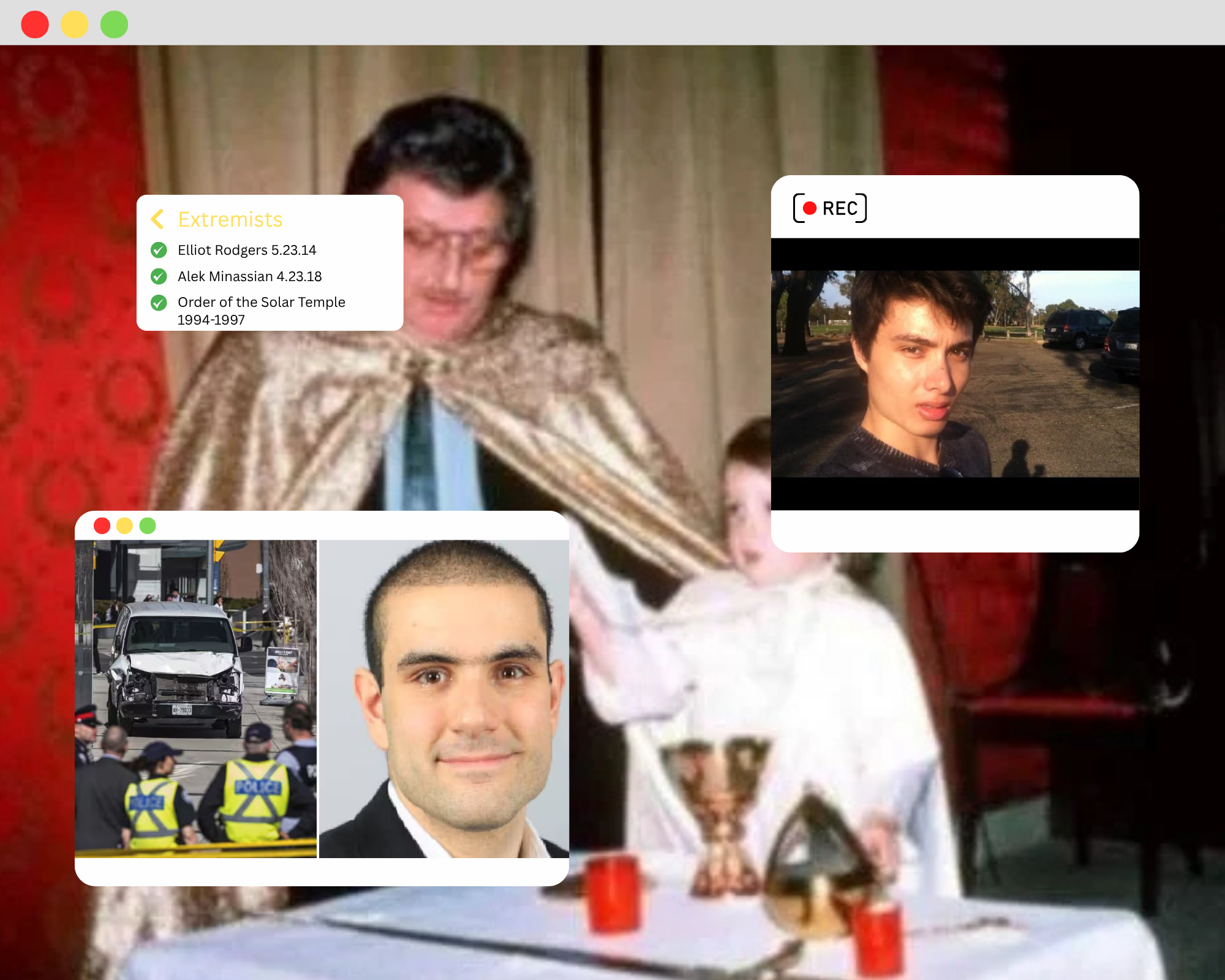
Before looking at how these violent outcomes come from identity fusion and extremist beliefs, it's important to give examples of events that were inspired by the heart of this discussion. On May 23, 2014, Elliot Rodger killed six people and injured fourteen others near the University of California, Santa Barbara. He left behind a manifesto and video that showed deep misogyny and a desire to punish society for his loneliness. Four years later, on April 23, 2018, Alek Minassian drove a van into pedestrians in Toronto, killing eleven people and injuring fifteen. He referenced the "Incel Rebellion" and praised Rodger as his inspiration.
In a different context, the Order of the Solar Temple, a cult that mixed New Age, Templar, and Christian mystic beliefs, lost over 70 members to coordinated mass suicides and murders between 1994 and 1997, driven by the conviction that death would deliver them to a new spiritual realm. These traumatic events, though from very different worlds, all illustrate what happens when personal identity fuses with radical group ideology and rigid beliefs. In these extreme cases, any challenge to the group's beliefs feels like a threat to survival. Deep resentment can then turn into real-world violence.
Conclusion
Rabbit Hole Syndrome helps explain how people move from everyday vulnerability to dangerous extremism. Whether it happens in a cult compound or an online echo chamber, the process relies on isolation, rigid thinking, and exploiting emotional pain.
Escaping these extremist rabbit holes takes more than fact-checking or logical arguments. You cannot reason someone out of a belief they did not reach through reason. What is needed is a deeper understanding of the emotional and identity needs that made the rabbit hole appealing in the first place.
The rabbit hole does more than trap people in false beliefs. It gives them things they deeply need, such as certainty, community, purpose, and an explanation for their pain. Unless we address these basic needs, rabbit holes will continue to attract new victims, one vulnerable person after another.

References
Bachaud, L., & Johns, S. E. (2023). The use and misuse of evolutionary psychology in online manosphere communities: The case of female mating
strategies. Evolutionary Human Sciences, 5, e28.
Bachaud, L., Murphy, M., & Johns, S. E. (2025). A hundred and two just-so stories: Exploring the lay evolutionary hypotheses of the manosphere.
Evolutionary Human Sciences.
Botto, M., & Gottzén, L. (2024). Swallowing and spitting out the red pill: Young men, vulnerability, and radicalization pathways in the manosphere.
Journal of Gender Studies, 33(5), 596–608.
Fox, A. R., Kaufman, R., & Hollan, J. D. (2020). Falling down the rabbit hole: Exploratory search and the case for personal information
environments. ACM.
Franklin-Paddock, B., Platow, M. J., & Ryan, M. K. (2025). From privilege to threat: Unraveling psychological pathways to the manosphere.
Archives of Sexual Behavior, 54, 1325–1340.
Gilmour, J. (2025). Narrative matters: Adolescence in the manosphere – A perfect storm? Child and Adolescent Mental Health, 30(3), 320–322.
Ging, D. (2019). Alphas, betas, and incels: Theorizing the masculinities of the manosphere. Men and Masculinities, 22(4), 638–657.
González, I., Moyano, M., Lobato, R. M., & Trujillo, H. M. (2022). Evidence of psychological manipulation in the process of violent radicalization: An
investigation of the 17-A cell. Frontiers in Psychiatry, 13, 789051.
Halpin, M., Gosse, M., Yeo, K., Handlovsky, I., & Maguire, F. (2025). When help is harm: Health, lookism and self-improvement in the manosphere.
Sociology of Health & Illness.
James, R. (2024). Take the red pill, blame feminism: Victimization narratives across the manosphere. Men and Masculinities, 27(5), 525–532.
Kristinsdottir, K., Ebner, J., & Whitehouse, H. (2025). Extreme overvalued beliefs and identities: Revisiting the drivers of violent extremism. Frontiers
in Psychology, 16, 1556919.
Mallett, S. J. (2000). A qualitative study of the experiences of former Bible-based cult members [Doctoral dissertation, The University of Leeds].
Neill, A. (2013). Developmental nonsense in the Alice tales. Style, 47(3), 380–396.
Sutton, R. M., & Douglas, K. M. (2022). Rabbit hole syndrome: Inadvertent, accelerating, and entrenched commitment to conspiracy beliefs.
Current Opinion in Psychology, 48, 101462.
Tinelli, L., Destratis, P., Curci, A., Schincariol, A., Melis, G., & Scarpazza, C. (2026). Are psychologists aware of group psychological abuse? A
survey on awareness of the phenomenon among Italian psychologists. Frontiers in Psychology, 17, 1749074.
Woolley, K., & Sharif, M. A. (2022). Down a rabbit hole: How prior media consumption shapes subsequent media consumption. Journal of
Marketing Research, 59(3), 453–471.
Wrisley, S. P. (2017). Misogynists have feelings, too: An analysis of circulating affect in The Red Pill [Master's thesis, Georgia State University].
Zhong, W., Cristofori, I., Bulbulia, J., Krueger, F., & Grafman, J. (2017). Biological and cognitive underpinnings of religious fundamentalism.
Adams, L. B., DeVinney, A., Aljuboori, D., Bachman, S., Lateef, H., Habteyesus, A., & Willie, T. C. (2026). Performing strength: Racialized
masculinity in the lived experiences of Black men at risk of suicide. American Journal of Men’s Health, 1–11.
Gilmour, J. (2025). Adolescence at risk: Online misogyny, mental health, and the urgent need for action. The Association for Child and Adolescent
Mental Health (ACAMH).
Reeves, R. V., & Secker, W. (2023, November 17). Male suicide: Patterns and recent trends (Updated September 2024). American Institute for Boys
and Men.
Shpall, S. (2025). Incels and warrior masculinity. Hypatia, 1–28. https://doi.org/10.1017/hyp.2025.12
Talton, W. J. (2020). Sex, gender, sexual assault, and rape on the Red Pill: A thematic and linguistic analysis [Master's thesis, University of Central
Florida]. STARS. https://stars.library.ucf.edu/etd2020/302
Whittaker, J., Costello, W., & Thomas, A. G. (2024, May 22). Predicting harm among incels (involuntary celibates): The roles of mental health,
ideological belief and social networking. Commission for Countering Extremism. https://www.gov.uk/government/publications/predicting-harm-among-incels-involuntary-celibates
